

Caregiver Monitor Q2 2025: People over fifty want to financially support children or grandchildren with home purchase

The housing market has been under pressure for years. We see house prices continuing to rise, while the supply of affordable new-build homes lags behind. According to CBS, the average price of an existing home in 2025 is around €470,000, with some regions seeing increases of more than ten percent in a single year.
At the same time, the housing shortage is estimated at nearly 400,000 homes, and this is expected to rise to more than 450,000 by 2027. This makes it increasingly difficult for the younger generation to buy their first home or take the next step on the property ladder.
In this tight market, the role of family seems to be becoming more important. Older people, who have built up more wealth over the years, are increasingly stepping in financially. To gain more insight into this, Beep for Help conducted a new survey among 1,324 Dutch people over fifty. How do they view their own retirement, do they plan to support their children or grandchildren financially with a home purchase, and what kind of amounts are we talking about?
Financial pressure
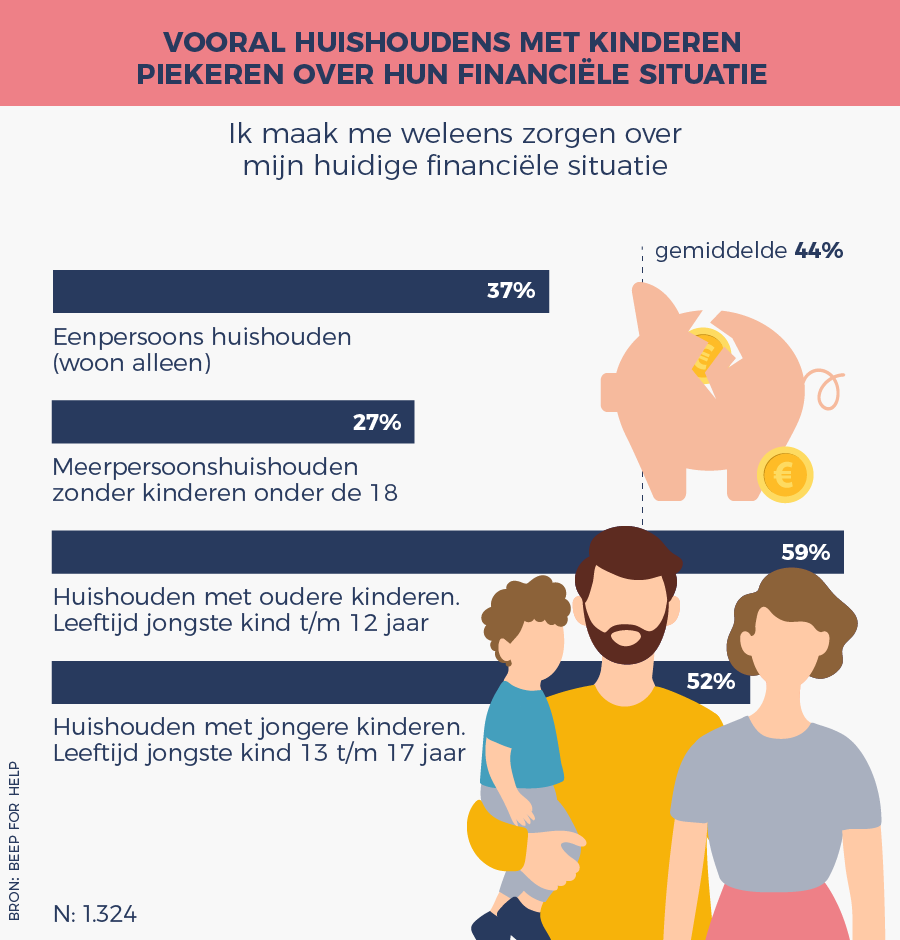
Late last year, figures from Wijzer in Geldzaken showed that 71 percent of Dutch people are concerned about the rising cost of living. Nibud also reports that one in five people have less than €1,000 in their savings account. The Informal Care Monitor by Beep for Help confirms that many Dutch adults over fifty are worried about their current financial situation. As many as 59 percent of households with young children also worry about their finances from time to time.
Retirement concerns
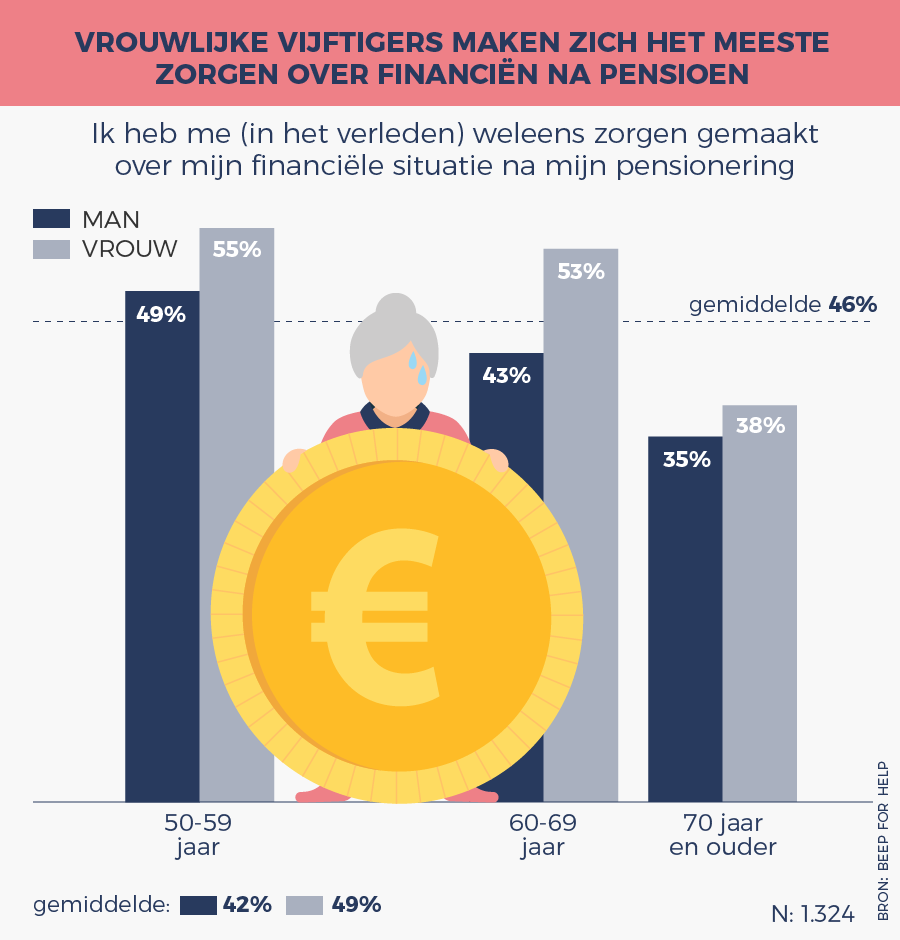
In the Netherlands, retired women between 65 and 79 receive an average of forty percent less pension than men, according to the Pension Monitor. Causes include wage gaps, part-time work, and career breaks. Strikingly, nearly half of the respondents were unaware of this difference, believing that women receive about the same or even more pension. The current study shows that this inequality is also reflected in concerns about the future. For instance, 55 percent of women in their fifties worry about their old age, compared to 49 percent of men. Among those in their sixties, this gap widens further to 53 percent for women and 43 percent for men.
The willingness to help
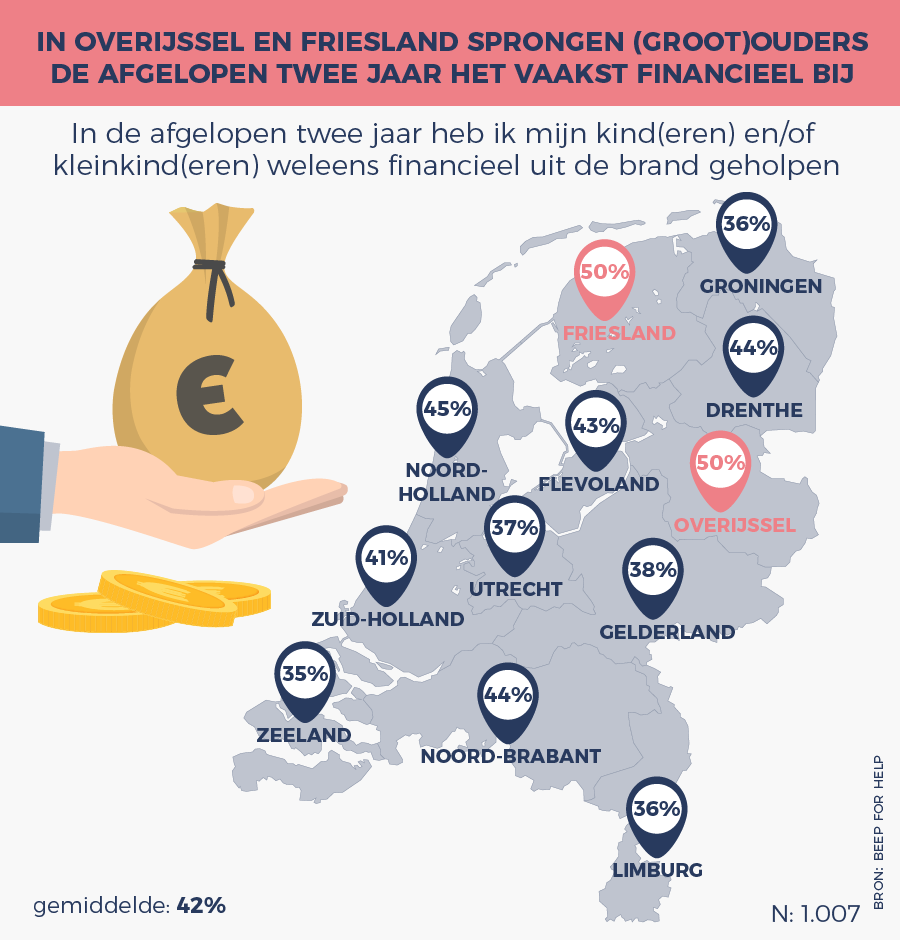
Average disposable income varies by province. According to Statistics Netherlands (CBS), disposable income is higher in provinces like Utrecht, North Holland, and North Brabant than in Friesland, Drenthe, and Groningen. However, a lower income does not automatically mean less willingness to help out financially. The study shows that in Overijssel and Friesland, half of those over fifty have financially supported their children or grandchildren in the past two years. This is well above the national average of 42 percent. Sometimes it is not a matter of willingness, but of ability: not everyone has the means to help, even if the desire is there.
New rules, old concerns
The government is giving first-time buyers a helping hand through the transfer tax exemption for starters, which waives the two percent tax on the first purchase of a home. From January 1, 2026, the threshold for this exemption will increase from €525,000 to €555,000. At the same time, building regulations are being relaxed to make the construction of new homes faster and cheaper. Despite these measures, many first-time buyers still struggle to find a home that fits their budget, especially in popular regions where prices continue to rise rapidly.
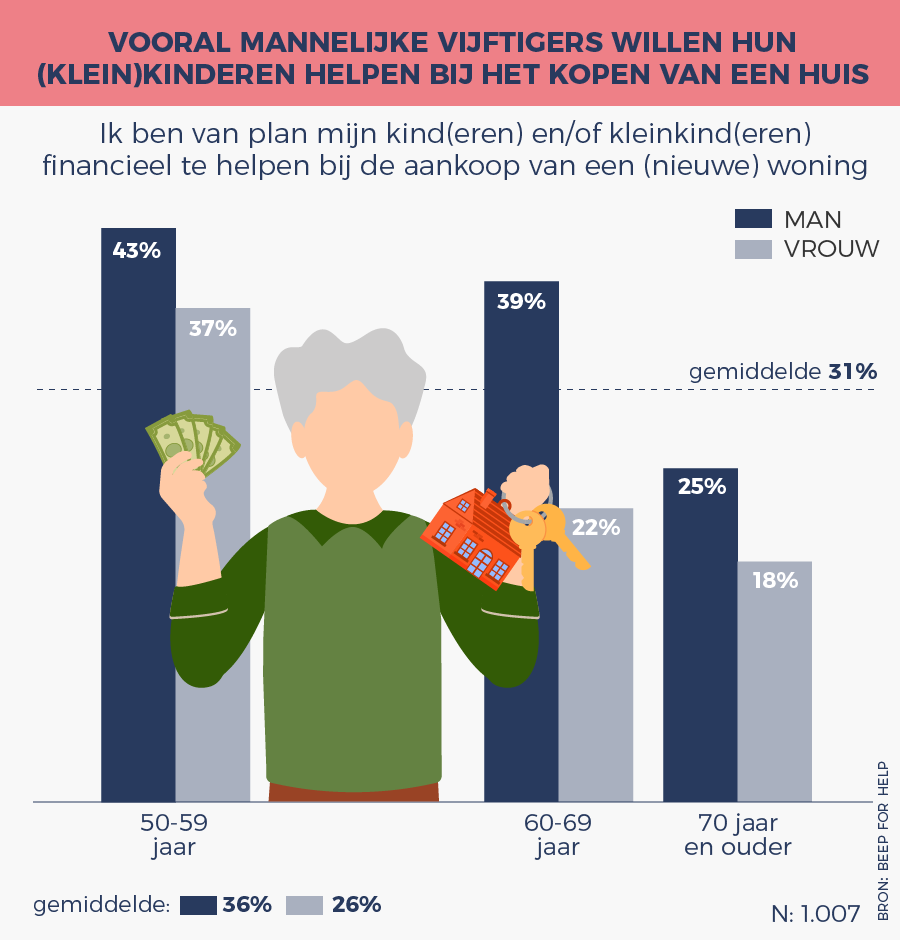
The study shows that many people over fifty are willing to help their children or grandchildren financially with buying a home (thirty percent). Men between 50 and 59 are particularly willing to help their children or grandchildren with a home purchase. In this group, 43 percent say they want to contribute, compared to 37 percent of women. Among 60- to 69-year-olds, this is 39 percent of men and 22 percent of women.
Contributing to the cause
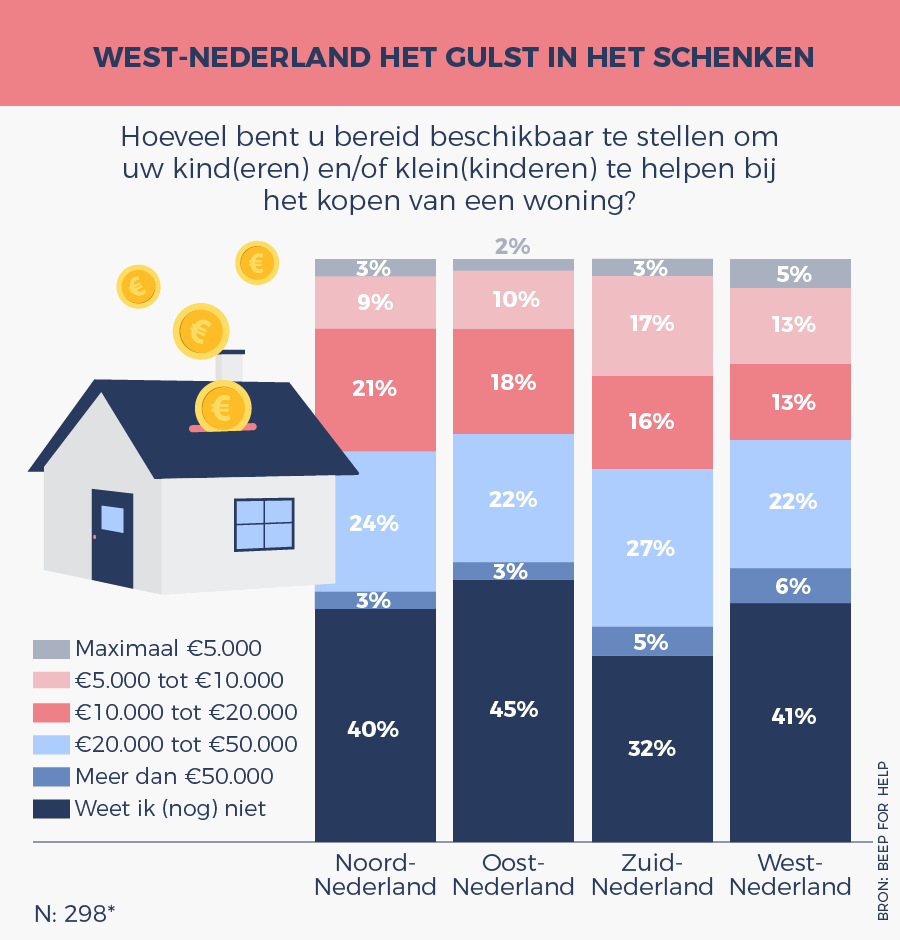
In a housing market where first-time buyers are increasingly left behind, many people over fifty want to help give their children or grandchildren a chance. The Caregiver Monitor shows that nearly a third of older people who want to contribute plan to gift more than twenty thousand euros, and five percent even fifty thousand euros or more. In the western Netherlands, the intended amounts are the highest. In every region, the largest group indicates that they do not yet know exactly what amount they ultimately want to gift.
Explore previous Informal Care MonitorsCurious about previous Informal Care Monitors on housing, health, and digitalisation? View here the past editions. For now, this is the final edition, as we will be focusing our attention on other topics in the coming period. We may return with a new edition later once we spot interesting new developments.
About Beep for Help
Beep for Help connects those in need of assistance with those who can provide it. Through its app and telephone line, the organization offers efficient and reliable support, aiming to relieve the burden on the elderly and their caregivers as much as possible. At the same time, Beep for Help is committed to addressing social issues such as an aging population and the growing pressure on caregivers.